Bridging Precision and Strategy: An Exclusive Interview with Zhu Jiang on the Future of Mold Manufacturing Management
By: Jonathan Reed, Senior Industry Correspondent
In today’s rapidly evolving manufacturing landscape, few executives embody the convergence of technical understanding and strategic management as effectively as Zhu Jiang, General Manager of Shanghai Pronics Precision Mold Co., Ltd. With decades of experience and a solid academic background rooted in economics and international exposure, Zhu has been quietly shaping how precision mold enterprises operate in an increasingly complex global environment. In this exclusive interview, he shares his insights into the challenges, transformations, and future direction of the industry.
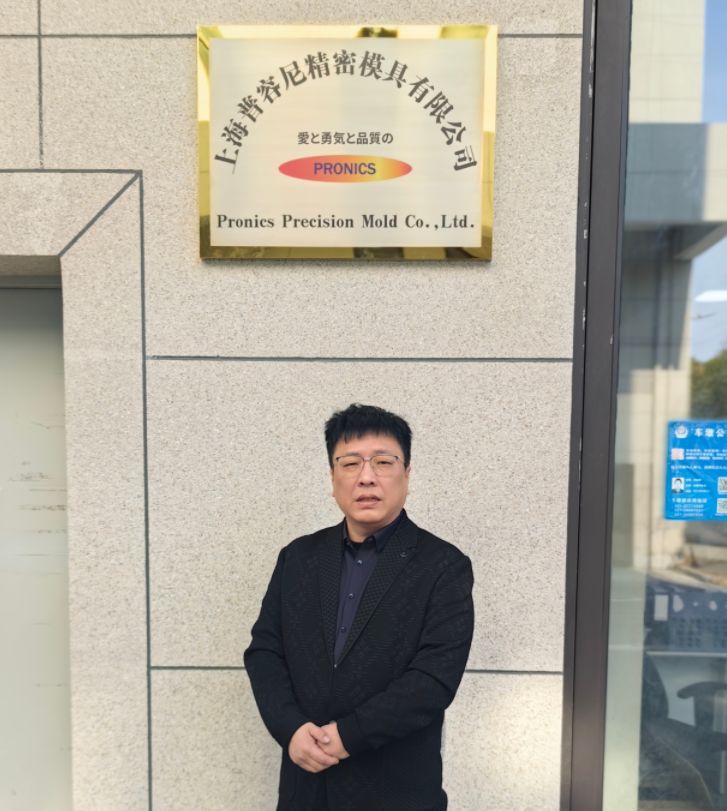
Photo: Mr. Zhu Jiang
Zhu’s journey into manufacturing leadership is anything but conventional. After completing his undergraduate studies in International Tourism at Okayama Shoka University and later earning a master’s degree in Economics (with a focus on marketing) from Okayama University in Japan, he developed a strong foundation in both market dynamics and organizational strategy. This academic background, combined with his long-term experience in the manufacturing sector, has enabled him to approach industrial management from a multidimensional perspective.
Since assuming the role of General Manager at Shanghai Pronics Precision Mold Co., Ltd. in April 2017, Zhu has been responsible for overseeing the company’s overall operations. His responsibilities extend beyond routine management tasks; they include capital allocation, executive recruitment, internal policy development, market expansion, and client collaboration. According to Zhu, the role of a manufacturing executive today is no longer confined to production oversight. “Modern manufacturing requires integration,” he explains. “It is about aligning technical feasibility with business strategy and resource efficiency.”
This perspective is particularly relevant in the precision mold and injection molding sector, which serves as a foundational component for industries such as electronics, automotive, and medical devices. Zhu emphasizes that the industry’s biggest challenge lies not in isolated technical breakthroughs, but in achieving systemic coordination across design, production, and delivery processes. “Many companies still struggle with fragmented workflows and delayed feedback loops,” he notes, pointing out that inefficiencies often stem from a lack of cohesive management rather than technological limitations.
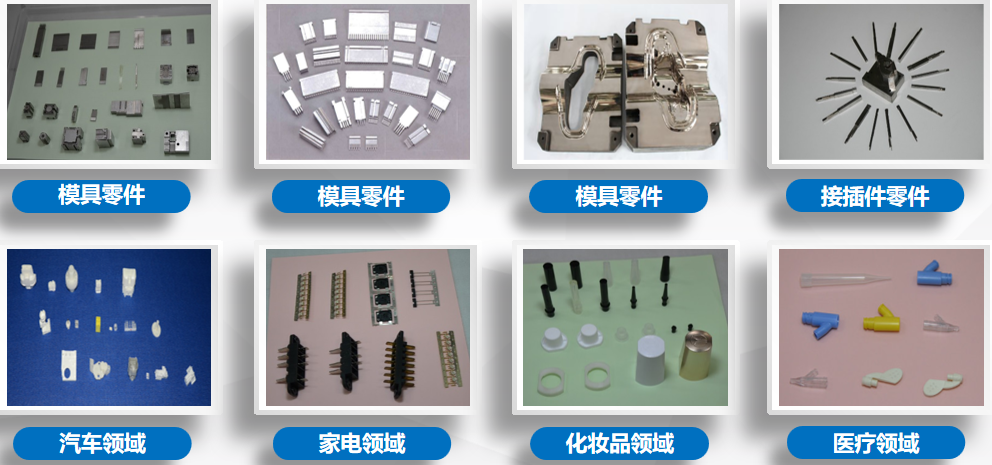
Product Display
As global manufacturing trends shift toward higher precision and greater efficiency, Zhu has observed a growing need for management-driven transformation. He highlights that companies must move beyond experience-based decision-making and adopt more structured, data-informed approaches. “In the past, decisions were often based on individual experience,” he says. “Now, the scale and complexity of operations demand a more systematic framework.”
Under his leadership, Shanghai Pronics Precision Mold Co., Ltd. has focused on strengthening internal coordination and enhancing operational efficiency. While Zhu refrains from framing these efforts as revolutionary, he acknowledges that incremental improvements in workflow management and resource allocation can yield significant long-term benefits. “The key is consistency,” he remarks. “Small optimizations, when applied systematically, can reshape an entire production process.”
Zhu also underscores the importance of talent in sustaining industrial competitiveness. His role in recruiting department leaders and technical professionals reflects his belief that human capital remains central to any manufacturing enterprise. “Technology evolves quickly, but people drive its application,” he states. This philosophy has guided his approach to building teams that can adapt to both technical and market changes.
Looking ahead, Zhu sees both challenges and opportunities for the industry. He points to increasing supply chain complexity and rising cost pressures as factors that will continue to shape the competitive landscape. At the same time, he believes that companies capable of integrating management expertise with technical understanding will be better positioned to navigate these challenges. “The future belongs to organizations that can balance precision with flexibility,” he says.
As the interview concludes, Zhu’s reflections reveal a consistent theme: the evolution of manufacturing is as much about management as it is about technology. His career demonstrates how a comprehensive approach—combining economic insight, operational control, and industry experience—can drive sustainable progress in a demanding field. In an industry often defined by machinery and metrics, Zhu Jiang’s leadership offers a reminder that strategic thinking remains at the heart of innovation.